Aging is a natural journey filled with memories, wisdom, and life experiences. However, as parents and elderly loved ones grow older, everyday activities that once felt simple may gradually become more challenging. Changes in mobility, health conditions, or emotional needs can make families wonder how to provide the right care while still respecting their independence.
A professional senior citizens care service offers a thoughtful solution by combining medical assistance, personal care, companionship, and emotional reassurance. These services are designed not only to manage health concerns but also to help older adults continue living with confidence, comfort, and purpose.
Whether a senior needs occasional help with daily activities, specialized nursing attention, rehabilitation support, or long-term care, personalized senior care ensures they receive assistance based on their unique needs.
Growing older should never mean giving up independence or the joys of everyday life. With the right care approach, seniors can continue enjoying meaningful routines, family connections, and moments that bring happiness.
What Is a Senior Citizens Care Service?
A senior citizens care service is a personalized care solution created to support older adults as their physical, emotional, and healthcare requirements change over time. These services bring together professional healthcare expertise, daily assistance, rehabilitation, and companionship to help seniors maintain a safe and fulfilling lifestyle.
Care may be provided at home, through assisted living communities, or specialized healthcare facilities depending on the senior’s condition and preferences. A good care plan considers medical history, mobility level, lifestyle choices, and personal goals to provide the right balance between assistance and independence.
Senior care services may include:
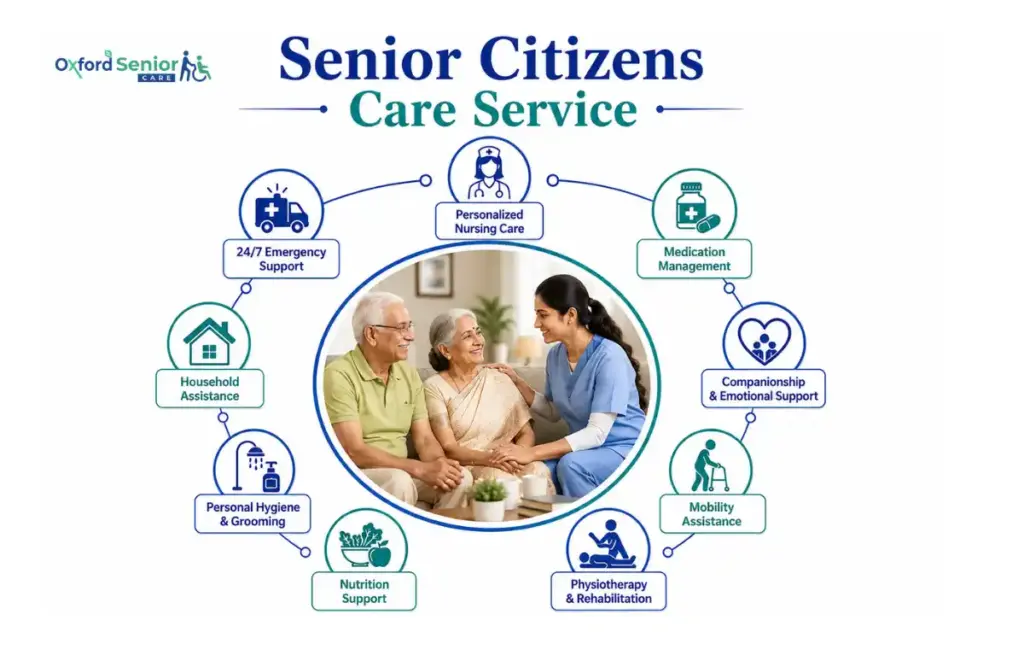
- Personal care assistance for bathing, dressing, grooming, toileting, and safe movement while respecting privacy and comfort.
- Skilled nursing care including medication support, wound care, injections, health monitoring, and management of ongoing medical conditions.
- Physiotherapy and rehabilitation to improve strength, balance, flexibility, and recovery after illness or surgery.
- Companion care that provides meaningful conversations, emotional connection, and social interaction.
- Dementia and Alzheimer’s care with structured routines, supervision, and cognitive support.
- Palliative and long-term care focused on comfort, symptom management, and emotional well-being.
Professional senior care is not about taking control away from older adults. It is about providing the right level of help so they can continue living safely and confidently.
Why Senior Citizens Care Services Are More Important Than Ever
People are living longer, healthier lives than before, creating more opportunities to enjoy retirement, family relationships, and personal interests. At the same time, longer lifespans may bring changing healthcare needs that require additional attention.
Modern family lifestyles have also evolved. Many adult children manage careers, responsibilities, and personal commitments while trying to ensure their aging parents receive proper care. Professional senior care helps families maintain this balance by providing expert assistance while preserving emotional connections.
- Supporting Healthy Aging: Trained caregivers help seniors maintain healthier routines, manage existing health conditions, follow care plans, and identify concerns early before they become serious problems.
- Helping Seniors Stay in Familiar Surroundings: Many older adults feel most comfortable in their own homes. Home-based senior care allows them to receive personalized assistance while remaining surrounded by familiar memories and routines.
- Improving Everyday Well-being: Senior care goes beyond medical needs. Caregivers encourage gentle activities, hobbies, social interaction, and healthy habits that contribute to emotional and physical wellness.
- Reducing Family Pressure: Professional caregivers allow families to spend more meaningful time with their loved ones instead of feeling overwhelmed by daily caregiving responsibilities.
- Flexible Care That Changes With Needs: A senior’s requirements may change over time. Care services can be adjusted based on recovery, health conditions, mobility, or personal preferences.
Pro Tip: The most effective senior care focuses on prevention, not only treatment. Regular monitoring, early attention, and personalized routines can help seniors maintain better health for longer.
Who Can Benefit from Senior Citizens Care Services?
Senior care is not limited to older adults with severe medical conditions. Many seniors benefit from professional assistance that helps them remain active, safe, and socially connected.
Senior care may be helpful for individuals who:
- Are recovering after surgery, illness, or hospitalization.
- Need assistance with personal care or mobility.
- Live with chronic conditions such as diabetes, arthritis, heart conditions, or neurological disorders.
- Experience memory-related changes or symptoms of dementia.
- Live alone and would benefit from regular supervision and companionship.
- Have balance concerns or a higher risk of falls.
- Need rehabilitation to regain strength and confidence.
- Require long-term or comfort-focused care.
- Want additional assistance while continuing to live independently.
Professional care also supports family members by sharing responsibilities and ensuring seniors receive consistent attention from trained caregivers.
Types of Senior Citizens Care Services
Senior care is never one-size-fits-all. Different services address different needs, allowing families to choose care that matches their loved one’s health, lifestyle, and preferences.
| Service | How It Helps Seniors |
| Home Care Services | Provides daily assistance while allowing seniors to remain comfortable in their own homes. |
| Personal Care Assistance | Helps with grooming, bathing, dressing, and mobility while maintaining privacy and independence. |
| Companion Care | Reduces loneliness through conversation, activities, emotional connection, and social engagement. |
| Skilled Nursing Care | Supports medical needs such as medication management, wound care, injections, and health monitoring. |
| Physiotherapy & Rehabilitation | Improves mobility, balance, strength, and recovery after illness or injury. |
| Dementia & Alzheimer’s Care | Provides structured routines, supervision, and cognitive assistance. |
| Palliative Care | Focuses on comfort, symptom relief, and emotional support during serious illness. |
| Respite Care | Gives family caregivers temporary professional assistance and time to recharge. |
Together, these services create a complete care approach that supports seniors physically, emotionally, and socially.
Benefits of Professional Senior Citizens Care Services
Professional senior care helps older adults maintain a better quality of life by addressing their physical, emotional, and daily living needs.
- Personalized Care Based on Individual Needs: Every senior has different health requirements, routines, and preferences. Professional caregivers create customized care plans that adjust as circumstances change.
- Better Safety and Fall Prevention: Falls can significantly affect senior health. Caregivers help identify risks, support safe movement, and encourage activities that improve balance and strength.
- Reliable Medication Management: Managing multiple medications can become confusing. Care professionals help seniors follow schedules correctly and observe changes that may require medical attention.
- Emotional Connection and Companionship: Social isolation can affect senior well-being. Regular interaction, conversations, and engaging activities help older adults feel valued and connected.
- Healthy Nutrition and Daily Habits: Caregivers can assist with meal preparation, hydration, and healthy routines that support strength, recovery, and overall wellness.
- Maintaining Independence: The goal of senior care is not to replace a person’s abilities but to encourage them. Seniors are supported in completing activities they can safely manage.
- Peace of Mind for Families: Families gain confidence knowing their loved ones are receiving attentive care from trained professionals.
Pro Tip: The best senior care plans look at the whole person—not only their medical condition. Emotional wellness, independence, nutrition, and social connection matter equally.
Creating a Safe and Senior-Friendly Environment
A safe living environment plays an important role in helping older adults maintain confidence and independence. Simple changes at home can make everyday activities easier while reducing the risk of accidents and injuries.
Helpful safety improvements include:
- Installing grab bars near toilets and inside showers for additional stability.
- Improving lighting in hallways, stairways, entrances, and frequently used areas.
- Removing loose rugs, clutter, and electrical cords that may create tripping hazards.
- Using non-slip mats in bathrooms and kitchens.
- Keeping frequently used items within easy reach to avoid unnecessary stretching or climbing.
- Ensuring walkers, canes, and other mobility aids are properly adjusted.
- Keeping emergency contact information easily accessible.
- Considering emergency response systems for seniors who live alone.
When combined with professional senior care, these adjustments create a safer environment where older adults can move around comfortably while maintaining their independence.
How Senior Citizens Care Services Improve Quality of Life
Aging well involves more than managing health concerns. Seniors also need emotional connection, meaningful activities, and a sense of purpose.
Professional care improves everyday life by supporting:
- Physical Wellness: Regular health monitoring, medication assistance, nutrition support, and rehabilitation help seniors maintain strength and manage existing conditions.
- Safety and Confidence: Caregivers provide supervision, mobility assistance, and preventive support that help reduce avoidable risks.
- Emotional Well-being: Companionship and meaningful interaction help reduce loneliness and create a stronger sense of connection.
- Daily Comfort: Assistance with everyday routines allows seniors to complete tasks more easily while continuing to participate in their own care.
- Social Engagement: Encouraging hobbies, family interaction, and enjoyable activities helps seniors remain active and involved.
- Stronger Family Relationships: When professional caregivers handle daily support needs, families can focus more on conversations, memories, and quality time together.
A senior who feels respected and understood is more likely to remain engaged, confident, and emotionally fulfilled.
Signs Your Loved One May Need Professional Senior Care
Many families wait until a crisis happens before considering additional care. However, the need for support often develops gradually. Recognizing early signs allows families to make thoughtful decisions before situations become overwhelming.
- Difficulty Managing Daily Activities: Challenges with bathing, dressing, cooking, cleaning, or moving around safely may indicate that additional assistance would be helpful.
- Frequent Falls or Reduced Mobility: Repeated falls, weakness, or balance issues should be taken seriously. Early mobility support and rehabilitation can help improve safety and confidence.
- Missed Medications or Appointments: Forgetting medications or medical appointments can lead to avoidable health concerns. Caregivers help seniors maintain consistent routines.
- Memory or Behaviour Changes: Confusion, increased forgetfulness, unusual mood changes, or difficulty following familiar tasks may suggest the need for structured support.
- Changes in Eating Habits: Poor appetite, dehydration, or unexplained weight changes can affect health and recovery. Care assistance can encourage better nutrition.
- Increased Isolation: If a senior withdraws from activities, avoids conversations, or spends most of their time alone, companionship care may improve emotional well-being.
- Family Caregiver Exhaustion: When caregiving begins affecting a family member’s physical or emotional health, professional assistance can create a healthier balance.
Pro Tip: Choosing professional care early is not about limiting independence—it is about helping seniors stay safer and healthier for longer.
How to Choose the Right Senior Citizens Care Service
Selecting a care provider is an important decision. The right service should combine healthcare knowledge with patience, compassion, and respect for each senior’s individuality.
Important Factors to Consider
| What to Look For | Why It Matters |
| Trained caregivers and healthcare professionals | Ensures seniors receive safe and reliable care. |
| Personalized care plans | Allows support to match health needs, routines, and preferences. |
| Wide range of services | Makes it easier to adjust care as needs change. |
| Clear communication | Keeps families informed and involved. |
| Flexible care options | Allows services to increase or reduce when required. |
| Transparent pricing | Helps families plan confidently. |
| Good reputation and experience | Reflects commitment to quality care. |
Questions Families Should Ask
Before selecting a provider, consider asking:
- Are caregivers professionally trained and verified?
- Can care plans be customized?
- How often are care plans reviewed?
- What happens during emergencies?
- How are family members updated?
- Is there a dedicated care coordinator?
- Can services change as the senior’s condition changes?
A provider that values communication and continuity often creates a smoother and more positive care experience.
Home Care vs Assisted Living vs Nursing Homes
Different seniors require different levels of assistance. The right choice depends on health conditions, independence level, lifestyle preferences, and long-term goals.
| Feature | Home Care | Assisted Living | Nursing Home |
| Living Environment | Senior’s own home | Residential community | Healthcare facility |
| Independence | Higher | Moderate | More limited |
| Medical Support | Scheduled professional visits | Basic onsite assistance | Continuous skilled nursing care |
| Daily Assistance | Customized based on need | Included daily support | Comprehensive support |
| Family Involvement | Very high | High | Moderate to high |
| Best Suitable For | Seniors who prefer staying at home | Seniors needing daily help and social activities | Seniors requiring ongoing medical supervision |
Which Option May Be Right?
Home Care May Be Ideal When:
- The senior prefers familiar surroundings.
- Medical needs can be managed through regular visits.
- Independence is a priority.
- Family members want to remain actively involved.
Assisted Living May Be Suitable When:
- Daily assistance is needed.
- Social activities and community living are important.
- Managing a household has become difficult.
Nursing Home Care May Be Necessary When:
- Continuous medical supervision is required.
- Health conditions need specialised monitoring.
- Home-based support is no longer sufficient.
Pro Tip: Age alone should not decide care needs. The best option depends on health, personal wishes, safety, and lifestyle goals.
Tips for Families Supporting Aging Loved Ones
Supporting an aging parent or relative is an expression of love, but it can also become demanding. The goal is not to do everything for seniors—it is to help them live with confidence and respect.
- Encourage Independence: Allow seniors to continue activities they can safely perform. This helps maintain confidence and a sense of achievement.
- Stay Emotionally Connected: Regular conversations, visits, and shared moments remind seniors that they remain an important part of family life.
- Promote Healthy Habits: Balanced meals, gentle exercise, proper hydration, and good sleep routines support healthier aging.
- Notice Small Changes: Changes in mood, appetite, memory, or mobility may indicate health concerns that need attention.
- Discuss Future Care Early: Open conversations about preferences and expectations allow families to make decisions calmly rather than during emergencies.
- Remember Caregiver Well-being: Family caregivers also need support. Sharing responsibilities and seeking professional assistance can prevent exhaustion.
Pro Tip: The strongest senior care approach comes from teamwork between families and professional caregivers.
Why Early Senior Care Makes a Difference
Many people think senior care is only needed after a serious illness. In reality, early support can help older adults maintain independence and prevent future challenges.
Starting care earlier can help:
- Maintain healthier daily routines.
- Identify health concerns sooner.
- Improve medication consistency.
- Support mobility and prevent falls.
- Encourage better nutrition and activity.
- Reduce avoidable hospital visits.
- Provide emotional reassurance.
- Help families prepare for future needs.
Early care is not about expecting problems—it is about creating a stronger foundation for healthy aging.
Conclusion
Growing older is a natural part of life, but seniors should never feel they have to face its challenges alone. Every older adult deserves care that respects their choices, values their experiences, and supports their everyday happiness.A professional senior citizens care service provides much more than assistance with daily tasks. It creates a complete support system that combines healthcare, companionship, safety, and emotional well-being.
For families, choosing professional care does not mean replacing love or involvement. Instead, it strengthens the care network around someone who has spent a lifetime caring for others.With the right caregivers, healthcare professionals, and family partnership, seniors can continue living with confidence, comfort, and purpose.Because the true gift is not just adding years to life—it is helping those years remain meaningful.