Getting older brings wisdom, experience, and unfortunately, a fair share of physical challenges. Stiff joints, weak muscles, poor balance, and chronic aches quietly reduce the quality of life for many older adults. Physiotherapy for elderly individuals is one of the most effective and medically supported ways to address all of these problems together. It does not require surgery, heavy medication, or expensive equipment. It requires the right guidance, the right movements, and the commitment to stay consistent. This guide covers everything you need to know about how physiotherapy helps older adults live stronger, safer, and more comfortable lives every single day.
What Is Physiotherapy for Elderly and Why Does It Matter
- Physiotherapy is a healthcare discipline that uses movement, exercise, manual therapy, and education to restore physical function and reduce pain. When applied specifically to older adults, it addresses the unique challenges that aging brings to the body, including muscle loss, joint stiffness, reduced coordination, and slower recovery from illness or injury.
- As people age, the body undergoes several changes that affect physical ability. Muscle mass decreases gradually after the age of 30 and speeds up significantly after 60. Joints lose their natural lubrication and become stiffer over time. Bone density reduces, increasing the risk of fractures from minor falls. Balance and coordination decline as the nervous system slows its response speed.
- Left unaddressed, these changes compound into bigger problems. A small fall can lead to a serious fracture. Persistent joint pain leads to reduced movement. Reduced movement leads to faster muscle loss. Faster muscle loss leads to greater instability and more falls. It becomes a difficult cycle that physiotherapy is specifically designed to interrupt and reverse.
- A trained physiotherapist evaluates each person individually, identifies the specific areas of weakness or dysfunction, and creates a personalised programme that addresses those exact problems safely. The goal is always to improve function, reduce pain, and help the older adult maintain as much independence as possible for as long as possible.
7 Key Benefits of Physiotherapy for Elderly Individuals
1. Improves Balance and Reduces Fall Risk
- Falls are the leading cause of serious injury among older adults worldwide. A single fall can result in a fractured hip, a head injury, or a loss of confidence that leads to reduced activity and faster physical decline. Physiotherapy directly targets the muscle groups, coordination patterns, and sensory systems responsible for keeping a person upright and stable.
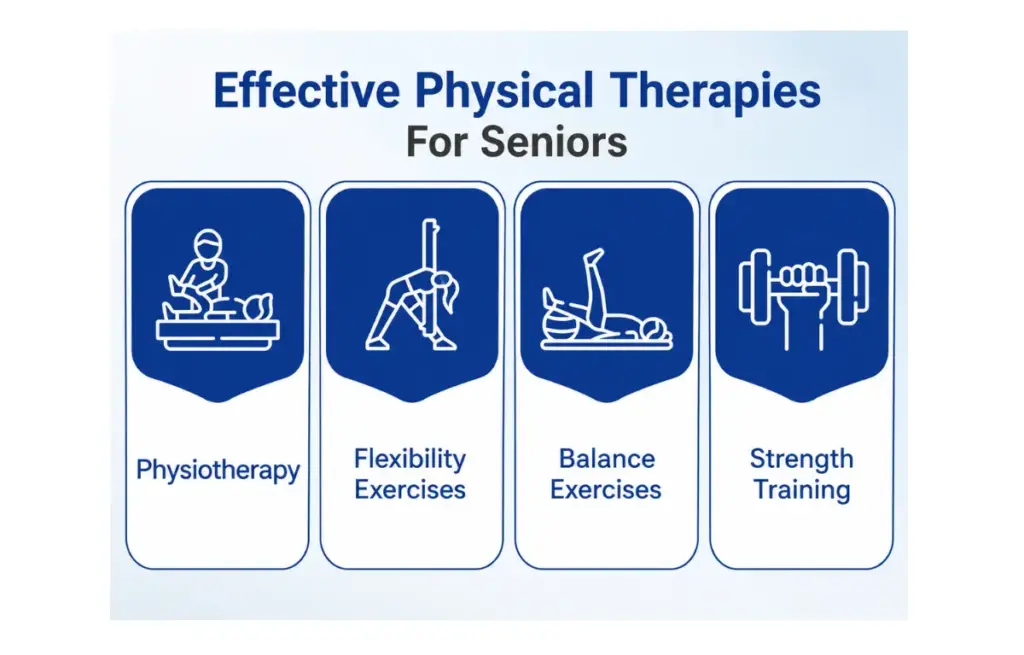
- Balance training in physiotherapy includes exercises like single-leg standing, heel-to-toe walking, and gentle weight-shifting movements that train the body to detect and correct imbalance before a fall occurs. The vestibular system, which controls the body’s sense of balance, can be retrained through specific exercises even in older adults. Ankle strength and hip stability, both of which play a central role in preventing falls, are built systematically through a progressive exercise programme.
- Research consistently shows that regular physiotherapy-based balance training reduces fall frequency in older adults significantly. For elderly individuals living alone, this improvement in stability can mean the difference between maintaining independence and requiring full-time care.
2. Reduces Chronic Pain Without Heavy Medication
- Many older adults live with persistent pain from conditions like osteoarthritis, lower back problems, shoulder stiffness, and nerve-related discomfort. Relying heavily on pain medications long-term carries risks including digestive problems, kidney strain, and dependency. Physiotherapy offers a natural and sustainable alternative.
- Manual therapy techniques used by physiotherapists include joint mobilisation, soft tissue massage, and myofascial release. These hands-on approaches reduce muscle tension, improve joint movement, and decrease the nerve sensitivity that contributes to chronic pain. Heat and cold therapy, ultrasound, and transcutaneous electrical nerve stimulation are additional tools used within physiotherapy sessions to provide pain relief without any medication.
- Alongside these hands-on treatments, physiotherapists teach older adults specific movements that reduce the load on painful joints, correct posture patterns that are contributing to discomfort, and build the muscle support that protects damaged areas from further irritation. Over several weeks, this combination produces lasting pain reduction that medication alone cannot provide.
3. Rebuilds Muscle Strength and Prevents Muscle Loss
- Sarcopenia is the medical term for the age-related loss of muscle mass and strength. It begins gradually in middle age and accelerates after 65. Weak muscles make everyday tasks like lifting grocery bags, rising from a low chair, or climbing stairs feel exhausting and sometimes impossible. This loss of functional strength is one of the primary reasons older adults lose their independence over time.
- Physiotherapy addresses sarcopenia through structured resistance exercises tailored to the individual’s current strength level and physical condition. These exercises do not require gym equipment or heavy weights. Resistance bands, bodyweight movements, and simple weighted exercises are used progressively to stimulate muscle growth and improve functional strength in a safe and controlled environment.
- The exercises focus on the muscle groups most critical for daily independence, including the quadriceps for rising from chairs, the glutes for stable walking, the core for upright posture, and the shoulder and arm muscles for lifting and carrying. Rebuilding strength in these areas directly translates to easier, more confident daily living for elderly individuals.
4. Improves Joint Mobility and Flexibility
- Stiff joints are one of the most common and frustrating parts of aging. Morning stiffness, reduced range of motion in the hips and shoulders, and the inability to bend, reach, or rotate freely all reduce a person’s ability to perform basic daily tasks independently. Physiotherapy targets joint mobility through a combination of stretching, joint mobilisation, and hydrotherapy in some cases.
- Stretching programmes in physiotherapy are carefully designed to address the specific joints causing the most limitations for each individual. Hip flexor stretches, shoulder mobility work, spinal rotation exercises, and ankle flexibility movements are commonly included. Unlike general stretching routines, physiotherapy-based flexibility work is progressed systematically and modified based on the person’s response to ensure the best outcome safely.
- Joint mobilisation techniques performed by a physiotherapist directly move the joint through its range of motion in a controlled manner, reducing the adhesions and stiffness that build up inside the joint capsule over years of reduced movement. The result is a gradual but meaningful restoration of movement that makes daily tasks significantly easier.
5. Supports Recovery After Surgery or Hospitalisation
- Older adults who undergo surgery, experience a serious illness, or spend extended periods in hospital often emerge with significantly reduced physical capacity. Muscle wastage during bed rest occurs rapidly in elderly individuals and can take months to regain without structured support. Physiotherapy is the primary tool used to restore that lost function as quickly and safely as possible.
- Post-surgical physiotherapy for elderly patients is carefully staged. In the early phase, it focuses on safe movement, wound protection, circulation, and preventing complications like blood clots. As healing progresses, it advances to rebuilding the strength, balance, and coordination needed to return to independent living. Hip replacement recovery, knee surgery rehabilitation, and post-stroke physical restoration are among the most common situations where physiotherapy plays a critical recovery role.
- The difference in outcomes between elderly patients who receive structured physiotherapy after surgery and those who do not is substantial. Faster return to walking, lower risk of secondary complications, reduced hospital readmission rates, and better long-term function are all consistently associated with post-surgical physiotherapy care.
6. Manages Neurological Conditions and Improves Daily Function
- Many older adults live with neurological conditions such as Parkinson’s disease, stroke effects, multiple sclerosis, or peripheral neuropathy. These conditions affect movement, coordination, speech, and daily function in ways that medication alone cannot fully address. Physiotherapy is an essential part of managing these conditions and preserving as much physical function as possible for as long as possible.
- For Parkinson’s disease specifically, physiotherapy focuses on gait training to reduce the shuffling walk pattern, balance exercises to reduce fall risk, and amplitude-based training that encourages larger, more deliberate movements. For stroke survivors, physiotherapy works to retrain the brain and body connection through repetitive task-specific exercises that promote neuroplasticity, the brain’s ability to rewire and rebuild function after damage.
- Balance boards, coordination exercises, and assistive device training are used depending on the condition and the individual’s current ability level. The goal is always to maximise independence and safety in daily activities regardless of the neurological diagnosis present.
7. Supports Mental Health and Emotional Wellbeing
- The connection between physical movement and mental health is deeply established in medical research. Older adults who experience chronic pain, reduced mobility, or frequent falls often develop anxiety about movement, social withdrawal, and depression. These mental health challenges then further reduce physical activity, creating a cycle that is difficult to break without professional support.
- Physiotherapy addresses this connection directly. As physical function improves, confidence in movement returns. The ability to walk more comfortably, participate in social activities, and perform daily tasks without assistance has a profound positive effect on mood, self-esteem, and overall sense of independence. Physiotherapists are also trained to provide encouragement and education throughout the process, helping elderly individuals understand their bodies better and feel more in control of their health journey.
- Group physiotherapy sessions, where available, add a social element that further supports emotional wellbeing by connecting older adults with others working toward similar goals in a supportive and encouraging environment.
What a Typical Physiotherapy Session Looks Like for Elderly Patients
- A physiotherapy session for an elderly person usually begins with a thorough assessment of the individual’s current physical condition, medical history, pain levels, and specific functional goals. This ensures the programme is personalised and appropriately paced.
- The session typically includes a gentle warm-up to prepare the joints and muscles, followed by targeted exercises chosen for the individual’s needs. These may include balance training, strength exercises, flexibility work, or functional movement practice like sitting to standing or walking with correct technique. Manual therapy may be included if joint or soft tissue treatment is needed.
- Sessions usually last between 30 and 60 minutes depending on the person’s energy levels and tolerance. The physiotherapist also teaches home exercise programmes so the benefits continue between clinical sessions and progress is maintained consistently.
Building a Consistent Physiotherapy Routine at Home
- The exercises and strategies learned in physiotherapy sessions become most effective when practised consistently at home between appointments. A simple daily routine of 15 to 20 minutes covering gentle stretching, balance practice, and basic strengthening movements maintains and builds on the progress made during sessions.
- Walking daily, even for short distances, supports cardiovascular health, joint mobility, and mood alongside the structured physiotherapy programme. Hydration, adequate sleep, and a nutritious diet all support the body’s ability to respond to exercise and recover between sessions effectively.
Conclusion
Aging does not have to mean declining. Physiotherapy for elderly individuals is a proven, safe, and deeply effective way to maintain strength, restore movement, reduce pain, and preserve independence well into the later years of life. Whether recovering from surgery, managing a chronic condition, or simply wanting to move more freely and confidently, starting physiotherapy is one of the best decisions any older adult can make for their long-term health and wellbeing.